Wilder than Lofoten
Senja is a wilder, quieter complement to Lofoten, with less polish and more weather-driven mood across the outer coast.
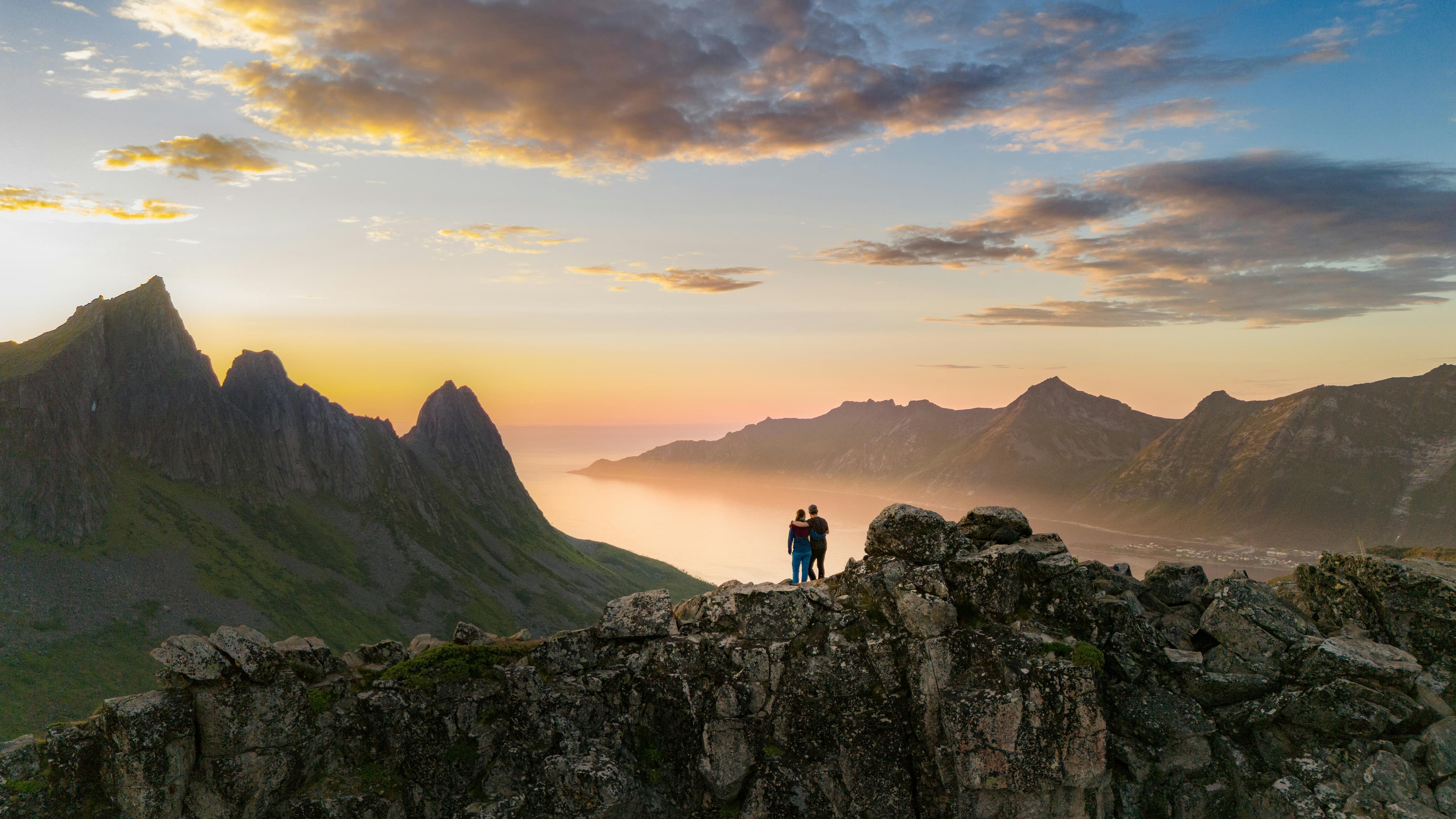
Northern Norway / Troms
Senja does not reveal itself all at once. One moment the road runs quietly beside a fjord, the next a mountain wall rises out of cloud and the next village seems impossibly small.
01 / First impression
Senja rewards travellers who slow down, check the weather, respect the villages and leave room for the unexpected.
This is not a checklist destination. Road choices, ferry timing, fog and wind can all reshape the day, and that is part of the island's character.
A strong Senja trip usually means fewer bases, conservative driving blocks and enough flexibility to pause when conditions are good.
02 / Navigation
Jump to the sections you need while planning.
03 / Perspective
Senja is a wilder, quieter complement to Lofoten, with less polish and more weather-driven mood across the outer coast.
The national scenic route is compact but weather-dependent. Small viewpoints and villages reward patient travel more than aggressive day plans.
Segla, Hesten and nearby mountain lines create strong hiking and photography opportunities, with midnight sun in summer and northern lights in darker months.
Most settlements are small and lived-in. Respect for parking, local roads and service limitations is essential.
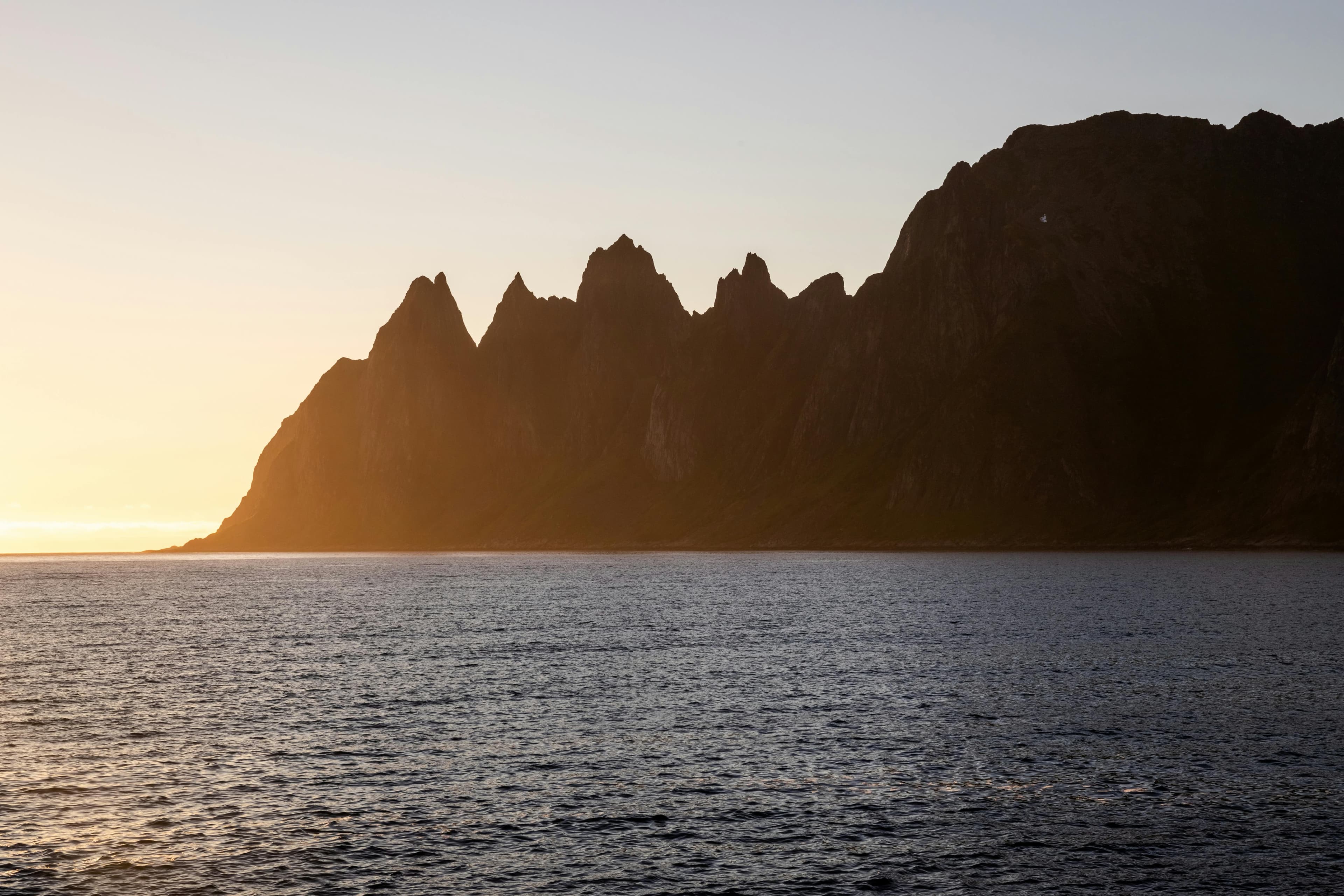
Mountain character
Senja's outer coast combines jagged profiles, sea exposure and rapid mood shifts.
04 / Orientation
Senja lies in Troms in Northern Norway and connects to the mainland via the Gisund Bridge near Finnsnes.
Senja works well with Tromso, Bardufoss, Vesteralen and Lofoten route planning, but it is best treated as its own weather-dependent island journey.
Finnsnes and Silsand are the practical year-round gateway for most arrivals and departures.
05 / Seasons
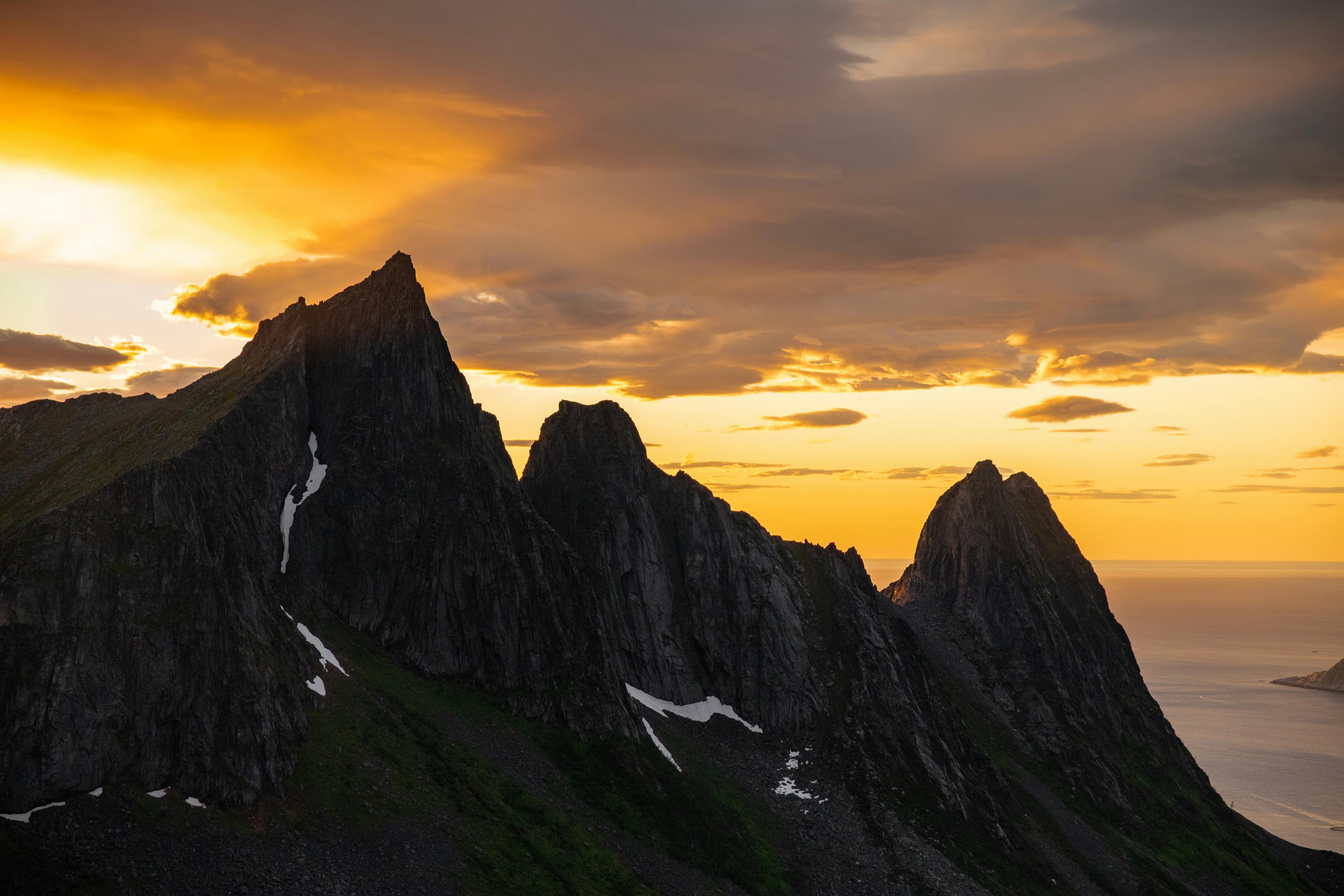
Seasonal mood
Light, weather and ferry pattern shifts define the season more than calendar labels.
June-August
Best for: Midnight sun, road trips, hiking, scenic route stops, camping and family travel.
Visit Senja lists midnight sun roughly from 20 May to 24 July.
Trade-off: Higher visitor pressure, tighter parking around popular stops and ferry planning demand.
September-October
Best for: Colors, mood, photography, quieter roads and early aurora windows.
A strong period for low-angle light and slower pacing.
Trade-off: Shorter days and more unstable weather.
November-March
Best for: Northern lights, Arctic atmosphere, snow and dramatic weather.
Aurora season is commonly treated as September-April, with polar night around 29 November to 22 January.
Trade-off: Winter driving complexity, limited daylight and possible service reductions.
April-May
Best for: Quieter travel, mixed snow-coast contrast and lower visitor pressure.
Useful transition period for flexible road travelers.
Trade-off: Wet terrain, snowmelt and hiking limitations in higher areas.
Best by goal
Midnight sun and summer hiking
June-July
Quieter scenic driving
September-October
Northern lights and winter mood
October-March
Lower pressure shoulder travel
April-May
06 / Planning
1 day
Possible from Tromso, but rushed and highly weather-dependent.
2 days
Minimum for a scenic route sample with one overnight.
3-4 days
Recommended for slower travel and weather buffers.
5+ days
Best for hikers, photographers, aurora travelers and deep slow travel.
07 / Access
The practical year-round mainland connection for most travelers.
Useful route from the Tromso side when schedules and season align.
A seasonal corridor often used between Vesteralen and Senja.
Choose airport by onward route, rental-car availability and transfer tolerance.
Use Entur and Svipper to combine bus and ferry legs before committing plans.
08 / Mobility
09 / Ferries and planners
Do not trust old ferry screenshots. Use official planners the day before and the morning of travel. Timetables, weather and seasonal routes can change.
10 / Accommodation areas
Area-based planning is usually more useful than searching for one perfect stay.
Strong base for outer-coast atmosphere and iconic mountain-water contrast.
Useful for coastal mood, day hikes and changing weather drama.
Practical for scenic-route flow and shorter transitions between viewpoints.
Small-community pace with access to western and central road corridors.
Quieter base profile with slower road rhythm and nature focus.
Transit-efficient anchor for arrivals, late check-ins and early departures.
11 / Research names
These are well-known places worth researching, not ranked recommendations.
Availability, opening hours, prices and ownership can change. Always check official websites, trusted booking channels, ferry timing and cancellation terms before booking.
12 / Camping
Camping can be excellent here, but only when legal-distance rules and local limits are respected.
13 / Places
Practical island gateway with steady services and calmer transitions.
Practical note: Best for first or last overnight logistics.
Gateway, logistics
Wind-shaped harbour atmosphere on the western side.
Practical note: Check seasonal ferry context before planning this as a transfer node.
Ferry context, west coast
Small village scale with strong coastal light shifts.
Practical note: Services can be limited outside peak periods.
Village base, slow travel
Working harbour character and maritime pace.
Practical note: Good stop for observing local life rather than rushing through.
Harbour, local rhythm
Narrow coast geometry, dramatic peaks and weather texture.
Practical note: A strong base for short outings and flexible day plans.
Base option, photography
Open shoreline framed by steep mountain walls.
Practical note: Parking can be tight in summer and at popular photo windows.
Beach, scenic stop
Historic outpost feel with exposed sea atmosphere.
Practical note: Works well for slower western-route overnights.
Outer coast, overnight
Quiet village setting within scenic-route flow.
Practical note: Good for splitting longer scenic days into manageable stages.
Scenic route, practical stop
Elevated fjord view with sharp topographic contrast.
Practical note: Treat it as one strong stop, not one of many rushed viewpoints.
Viewpoint, short stop
Boardwalk perspective into serrated mountain skyline.
Practical note: Exposure can be high in wind and wet weather.
Viewpoint, weather-sensitive
Compact island-community footprint with strong character.
Practical note: Respect village parking and residential context.
Community, photography
Transport-oriented coast node with practical role.
Practical note: Useful in ferry-linked route frameworks.
Ferry, gateway
Sheltered village context near famous hiking terrain.
Practical note: Plan parking and timing early in busy hiking windows.
Hike access, village
Forest and mountain contrast rare in northern island travel.
Practical note: Respect protected-area guidance and trail conditions.
Nature, protected area
A compact sequence of changing weather, sea, peaks and villages.
Practical note: Best experienced with buffer time, not a compressed checklist.
Road trip, scenic route
14 / Hikes and viewpoints
Hiking choices should be weather-first and safety-first. Check UT.no, forecasts and local condition updates before departure.
Popular and steep
Very weather-sensitive route with exposure risk in poor conditions.
Moderate to demanding
Known for the classic view toward Segla. Check ground conditions before committing.
Moderate
Strong payoff hike when visibility is stable.
Moderate
Useful mountain option in flexible weather windows.
Moderate
Popular option with broad outlook and variable underfoot conditions.
Easy viewpoint access
High-value stop for low effort, but exposed in rough weather.
Easy viewpoint access
Designed stop with broad fjord perspective.
Easy shoreline stop
Atmospheric beach area for short walks and weather watching.
Variable
Trail choice depends on season, terrain and your mountain experience.
Treat mountain routes as condition-dependent decisions. DNT mountain safety principles and current local weather should always override social media plans.
15 / Itinerary
1 day
Only workable if weather and transfers align. Focus on one corridor, not the full island.
2 days
One overnight and conservative driving give a better first impression than a same-day loop.
3-4 days
Balanced pace for scenic stops, village time and weather adaptation.
5+ days
Best for deeper mountain choices, light windows and true route flexibility.
Treat these as frameworks, not fixed schedules. Weather, ferries, daylight and local conditions should shape your final route.
16 / Trust notes
Editorial planning advice
Do not plan Senja as a quick photo stop between Tromso and Lofoten.
Official guidance
Do not trust old ferry screenshots.
Traveller-reported theme
Do not rely on public transport without careful planning.
Editorial planning advice
Do not underestimate weather and fog.
Official guidance
Do not drive too fast on narrow roads.
Official guidance
Do not park in passing places, private areas or village driveways.
Official guidance
Do not start Segla or Hesten without checking conditions and gear.
Traveller-reported theme
Do not assume restaurants and shops are open late or year-round.
Editorial planning advice
Do not arrive in peak season without accommodation.
Official guidance
Do not camp on private land, fragile terrain or too close to homes.
Official guidance
Do not fly drones without checking rules.
Editorial planning advice
Do not treat Husoy, Mefjordvaer or Fjordgard as photo props.
17 / Responsibility
Drone guidance
18 / FAQ
Yes, especially if you want a wilder and quieter northern island route with strong landscape contrast and slower pacing.
Three to four days is the strongest first-trip range, with two days as a minimum sample.
For most first-time visitors, yes. Public transport exists but limits flexibility and timing.
It is possible, but often rushed and strongly weather-dependent.
Summer is easiest for access and hiking, while autumn and winter offer stronger mood with higher weather complexity.
Choose by route rhythm: Finnsnes for logistics, outer-coast villages for atmosphere, and scenic-route zones for balanced driving days.
Hesten is widely known for the classic view toward Segla. Both are weather-sensitive and should be planned cautiously.
Yes, in darker months with clear sky conditions and stable weather windows.
Yes, with legal-distance rules, private-land respect and proper waste and toilet practices.
Some routes are seasonal or timetable-dependent. Always verify with official planners close to travel day.